
CHPU / Energy-saving servo motors
Reliable power.
More efficient. More effortless.
From precise control of every stitch
to everyday efficiency and stability.
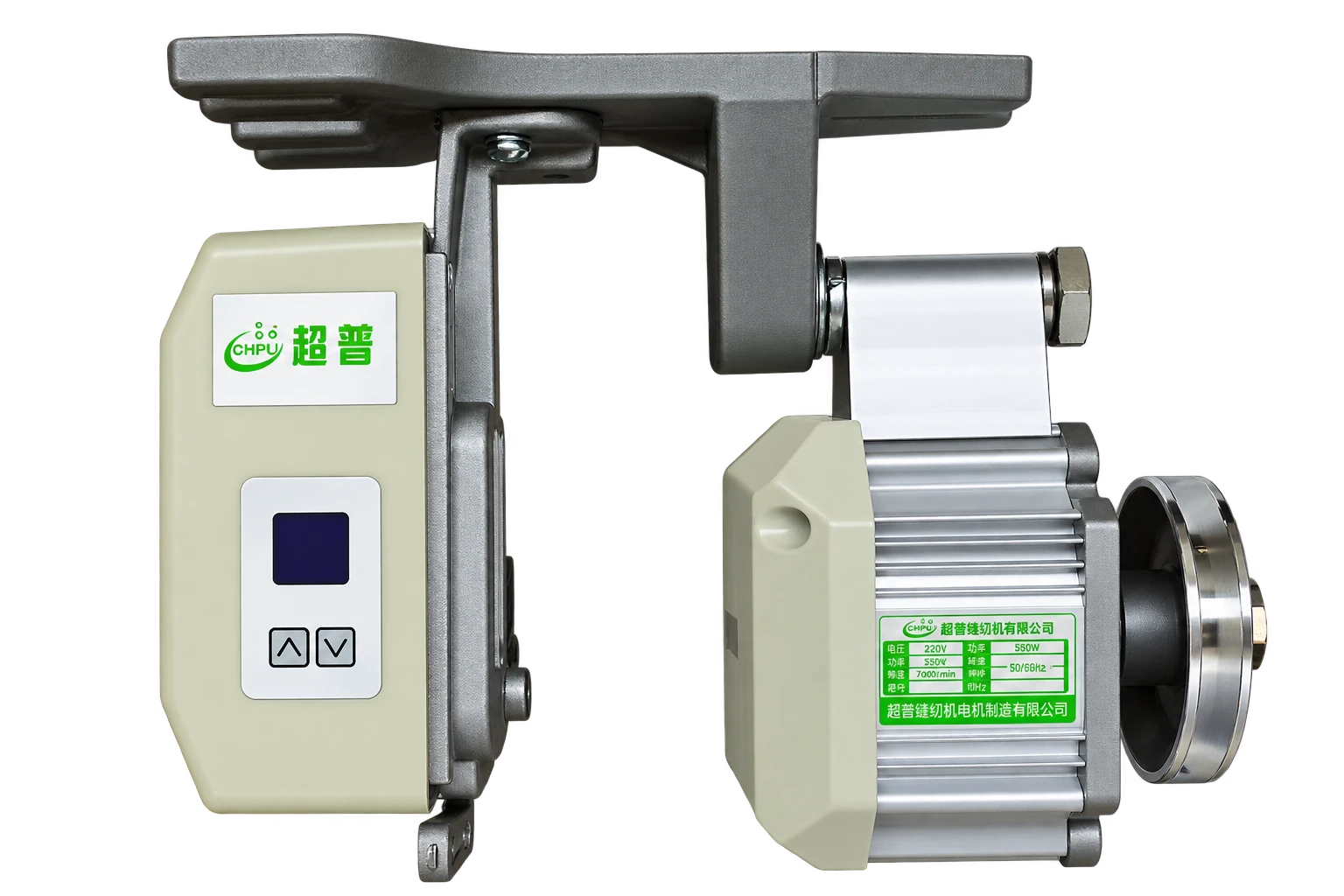
PERFORMANCE
See the advantages side by side.
Choose a metric to compare performance.
Works when needed. Stands by when stopped.
Computer control puts the motor into standby when the sewing machine is idle, reducing electricity consumed by unnecessary rotation.
Comparison conditions from the original website: 10 hours of use per day.
From a gentle start to responsive speed.
Stepless speed control with a quick response and accurate upper and lower needle positioning, adapting power to different sewing rhythms.
Both motors share a starting point of 100 r/min and use the same speed scale.
A quieter workspace.
A brushless design reduces friction and vibration for smoother operation and greater comfort during long working hours.
The waves are a visual illustration, not measured waveforms or a linear decibel scale.
Less weight. More installation flexibility.
A simpler motor structure reduces equipment weight while supporting convenient installation and everyday use.
The weight comparison uses the models listed on the original website.
Comparison data is retained from the original website. Actual performance depends on the selected model and operating conditions.
ENGINEERING
Reliability in every rotation.
Precise control
Stepless speed control and needle positioning help you manage speed and stopping position.
Reduced wear
No clutch or carbon brushes means fewer friction components and less maintenance.
Energy savings
Permanent-magnet drive reduces conversion losses and heat, improving the working environment.
Efficient material use
A lighter structure. The original website lists material savings of over 80%.
View the full performance comparison
The complete original website comparison is retained below for reference when selecting a motor.
Energy savings
- Energy-saving servo motor series
- Computer-controlled standby when the sewing machine is idle saves energy during operation.
- Conventional clutch motor
- Continues rotating when the sewing machine is idle, consuming electricity and producing noise and heat.
Operation
- Energy-saving servo motor series
- Stepless sewing speed control, quick response and accurate upper and lower needle positioning for precise, efficient operation.
- Conventional clutch motor
- Lower precision, less responsive stopping and cumbersome speed adjustment. No upper or lower needle positioning.
Maintenance
- Energy-saving servo motor series
- Magnetic drive technology with no clutch or carbon brushes. Low vibration and noise, reduced wear and maintenance-free operation as stated in the original comparison.
- Conventional clutch motor
- Clutch friction plates produce greater vibration and noise, have a shorter service life and require periodic replacement.
Energy savings
- Energy-saving servo motor series
- Permanent-magnet drive increases torque and reduces coil heat and energy conversion losses. The original comparison lists a working-environment temperature reduction of 2–5°C.
- Conventional clutch motor
- Coil drive produces lower torque. Converting electrical energy into magnetic energy consumes some electricity and generates heat.
Speed range
- Energy-saving servo motor series
- 100r/min-6000r/min
- Conventional clutch motor
- 100r/min-2800r/min
Noise
- Energy-saving servo motor series
- Below 60 dB(A)
- Conventional clutch motor
- Above 80 dB(A)
Running cost: maintenance
- Energy-saving servo motor series
- Minimal wear
- Conventional clutch motor
- Periodic friction plate replacement
Electricity use (10 hours/day)
- Energy-saving servo motor series
- 0.35 kWh
- Conventional clutch motor
- 2.2 kWh
Weight
- Energy-saving servo motor series
- 4KG
- Conventional clutch motor
- 18KG
Raw material savings
- Energy-saving servo motor series
- Over 80% savings
- Conventional clutch motor
- Higher material consumption
PRODUCT REFERENCES
More product and integration information.
Click an image to view the complete material.
Product overview
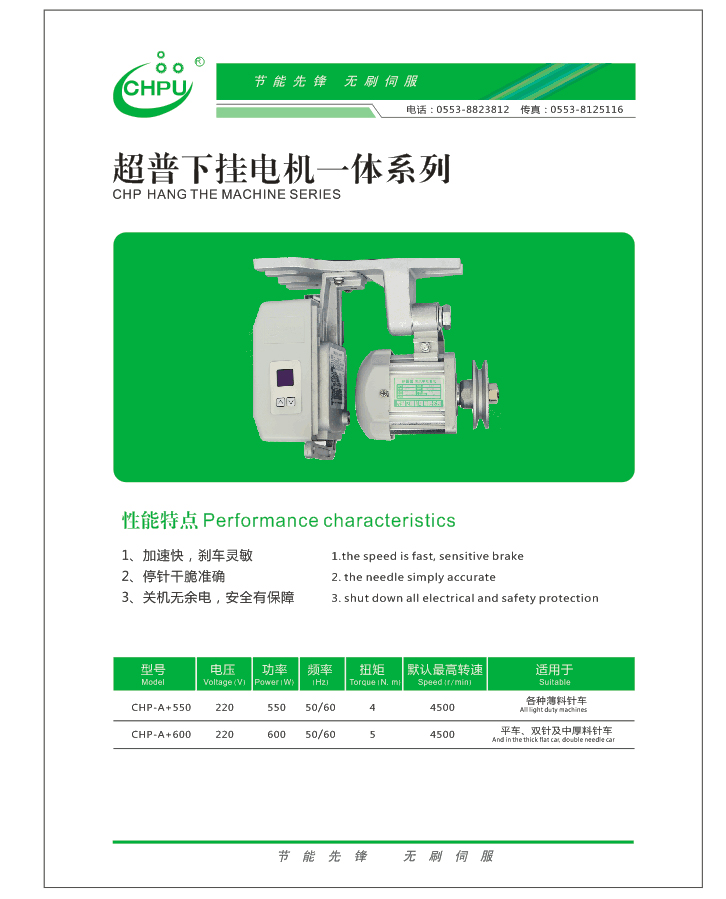
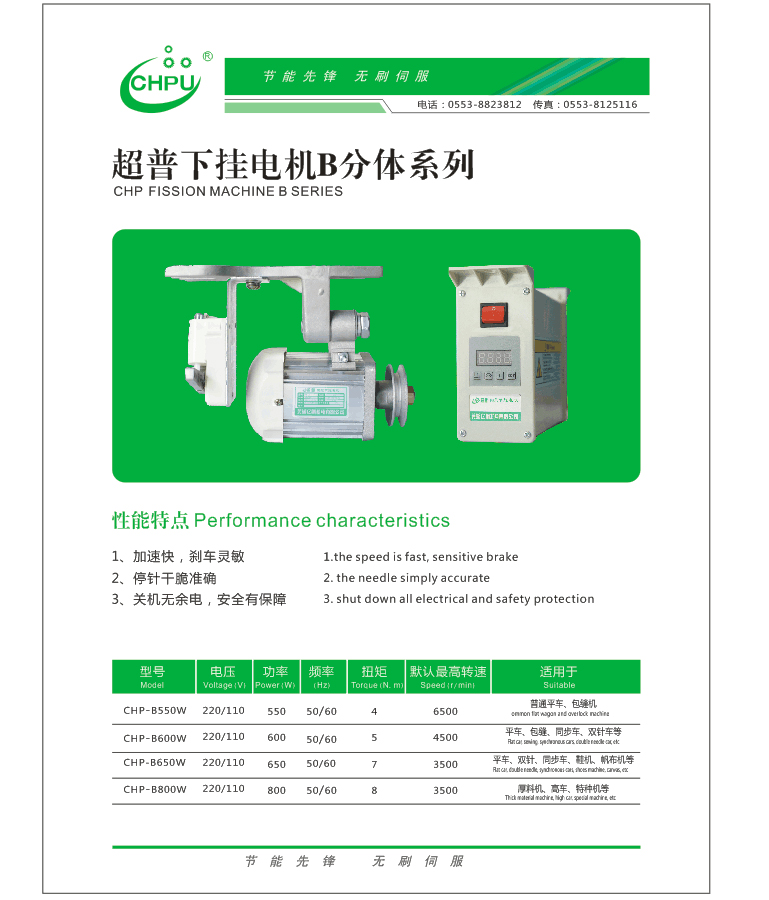
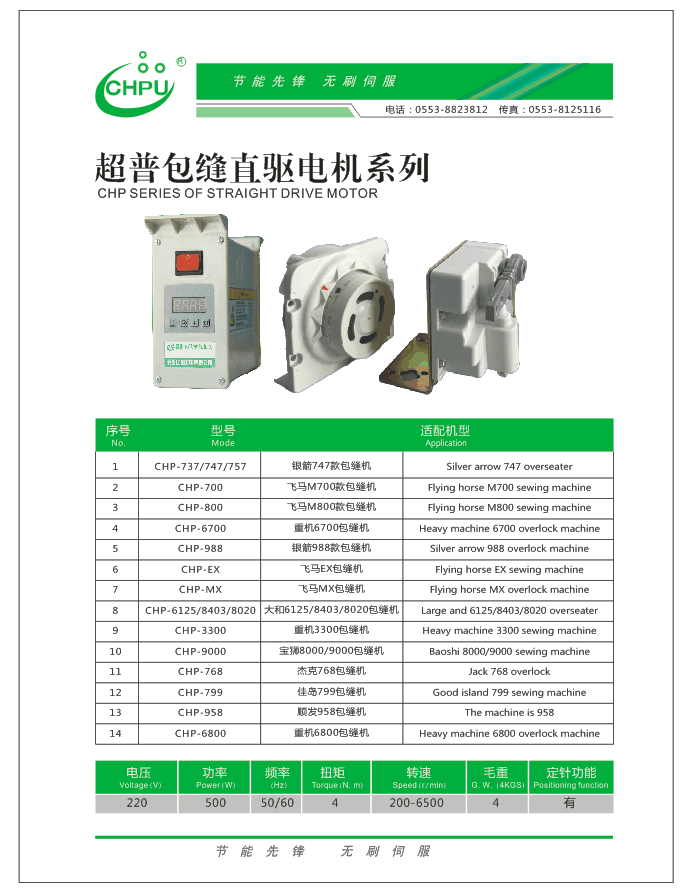
Technical performance comparison: energy-saving motors and conventional clutch motors
新款一体机
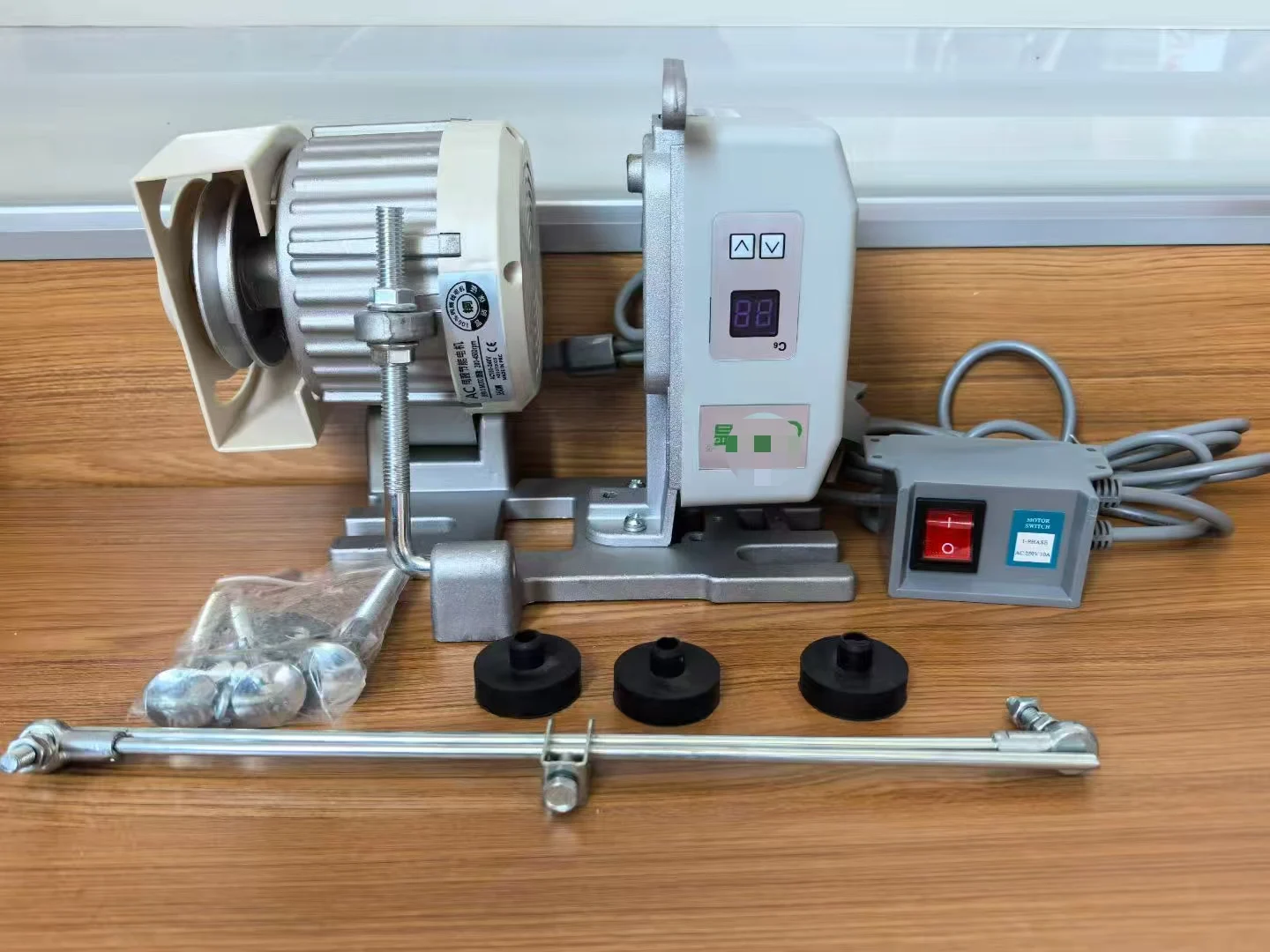
安排方便,可调速,正反转,定针功能等